Top Ad 728x90

samedi 18 avril 2026

He was in his cell, waiting to be executed, and he asked as a last…See more

by


 In a quiet holding cell, a young man once waited for a decision that would shape the rest of his life. His story, like many others, was not defined by a single moment but by a chain of circumstances that began long before the courtroom. His final request, often referenced in discussions about justice, has become symbolic of a broader debate that continues to unfold across the United States.


Cases like these invite society to confront deeply complex questions. How should the justice system respond when a child commits a serious crime? Where does accountability meet compassion? And perhaps most importantly, can a person who made a grave mistake in youth truly change over time?


El vídeo no se corresponde con el comentario. Cristián ...

Understanding Juvenile Sentencing in Context

The United States has one of the highest incarceration rates in the world, a fact frequently highlighted by organizations such as Human Rights Watch and Equal Justice Initiative. Within this system, juvenile sentencing remains one of the most debated areas.


Some individuals have received life sentences for actions committed before the age of 14. These cases vary widely. In some instances, the individual directly carried out a serious offense. In others, they were held legally responsible under theories such as accomplice liability.


Behind every statistic is a unique story shaped by environment, upbringing, and circumstance. Many young defendants come from backgrounds marked by poverty, instability, or limited access to education. While these factors do not excuse harmful actions, they provide important context for understanding behavior.


The Science of Adolescent Development

Modern research in Neuroscience and Developmental Psychology has significantly influenced how society views juvenile responsibility.


Scientists have found that the human brain continues to develop well into early adulthood. Areas responsible for impulse control, decision-making, and long-term planning are among the last to mature. This means that adolescents often process risk and consequences differently than adults.


From a scientific perspective, this developmental stage suggests a greater capacity for change. Young individuals are more adaptable, more responsive to intervention, and more capable of rehabilitation over time.


This understanding has played a key role in shaping modern legal approaches to juvenile sentencing.


El extraño caso del niño que mató a su hermano de 2 años y está libre


The Role of the Supreme Court

The Supreme Court of the United States has addressed juvenile sentencing in several landmark decisions.


In 2012, the Court ruled that mandatory life sentences without the possibility of parole for juveniles are unconstitutional. This decision emphasized the need for individualized sentencing that considers the unique circumstances of each case.


In 2016, the Court extended this principle by ruling that the decision must be applied retroactively. This opened the door for many individuals to seek sentence reviews.


These rulings did not eliminate life sentences for juveniles entirely. Instead, they required courts to consider factors such as age, background, and potential for rehabilitation before imposing the most severe penalties.


Variations Across States

Despite federal guidance, implementation has varied widely across states. Some jurisdictions have taken proactive steps to review past cases and expand parole opportunities. Others have moved more cautiously, resulting in significant differences depending on location.


This variation reflects the decentralized nature of the U.S. legal system, where states retain considerable authority over criminal justice policies.


As a result, two individuals with similar cases may experience very different outcomes based solely on geography.


Accountability and Public Safety

Any discussion of juvenile sentencing must also consider the impact on victims and communities. Serious crimes can cause lasting harm, and public safety remains a central priority.


Communities expect the justice system to provide protection and accountability. Families affected by crime often seek closure and recognition of their experiences.


These realities are essential to the conversation. A balanced system must acknowledge harm while also considering the broader context of each case.


Christian Fernández, la historia del asesino más joven de EE. UU. - Seamos  Mas Animales Como Ellos - SMACE


The Argument for Rehabilitation

Advocates for reform argue that the justice system should recognize the potential for growth and change. They emphasize that children are not fully formed adults and should not be judged as such.


Organizations like the Equal Justice Initiative have promoted the idea of meaningful parole opportunities. This does not guarantee release but allows for periodic evaluation based on demonstrated rehabilitation.


From this perspective, accountability and second chances are not mutually exclusive. A system can uphold responsibility while still allowing for the possibility of transformation.


Cultural and Moral Perspectives

Beyond law and science, the debate touches on fundamental cultural values. How a society treats its youngest offenders reflects its broader beliefs about justice, responsibility, and human potential.


In many cultures, childhood is seen as a time of learning and growth. Mistakes, even serious ones, are viewed within the context of development.


This raises important ethical questions. Should a decision made at age 13 define an entire lifetime? Should the legal system leave room for redemption?


There are no easy answers. These questions require careful consideration and ongoing dialogue.


The Role of Media and Public Awareness

Media coverage has played a significant role in shaping public understanding of juvenile sentencing. Stories that highlight individual cases often bring attention to broader systemic issues.


However, media narratives can vary in tone and depth. Some focus on legal details, while others emphasize emotional aspects. For readers, it is important to approach these stories with a critical mindset, distinguishing between verified information and interpretation.


Increased awareness has contributed to policy discussions and, in some cases, legislative reform.


12 Year Old Charged with Murder - YouTube


Toward a More Balanced System

Many experts believe that a balanced approach is essential. This includes several key elements.


First, individualized sentencing ensures that each case is evaluated on its own merits. Second, access to education and rehabilitation programs supports positive development. Third, structured parole systems allow for periodic reassessment.


These measures aim to create a system that is both fair and effective, protecting public safety while recognizing human potential.


A Continuing National Conversation

The debate over juvenile life sentences is ongoing. Legal decisions, scientific research, and public opinion continue to shape the conversation.


Each case contributes to a larger understanding of how justice systems can evolve. Policymakers, legal professionals, and communities all play a role in this process.


As new evidence and perspectives emerge, the discussion will likely continue to develop.


Conclusion: Justice, Growth, and Human Curiosity

At its core, the question of juvenile life sentences is about more than law. It is about how society understands growth, responsibility, and the possibility of change.


Human curiosity drives us to examine these complex issues, to ask difficult questions, and to seek better solutions. While there may never be a single answer, the ongoing conversation reflects a commitment to fairness and progress.


By balancing accountability with an understanding of human development, societies can move toward systems that are both just and compassionate.


Sources

Human Rights Watch

Equal Justice Initiative

Supreme Court of the United States decisions and legal summaries

American Psychological Association

National Institute of Justice

vendredi 17 avril 2026

My son h!t me 30 times in front of his wife… so the next morning, while he sat in his office, I sold the house he thought was his.

by


 I counted every single blow.

One.
Two.
Three.

By the time my son struck me for the thirtieth time, my lip was torn, my mouth tasted like blood, and whatever denial I still held as a father… was gone.

He thought he was teaching me a lesson.

His wife, Emily, sat on the couch watching, wearing that quiet, cruel smile people have when they enjoy someone else’s humiliation.

My son believed youth, anger, and a mansion in Beverly Hills made him powerful.

What he didn’t realize?

While he was acting like a king…

I had already decided to take everything back.

My name is Arthur Hayes. I’m 68.

I spent forty years building roads, towers, and commercial projects across California. I’ve negotiated through crises, survived recessions, and watched too many people confuse money with character.

This is how I sold my son’s house… while he sat in his office thinking his life was secure.

It was a cold Tuesday in February when I went to his birthday dinner.

I parked two blocks away. The driveway was full of leased luxury cars—perfect on the surface, owned by people who loved the image of success more than the work behind it.

In my hands was a small gift wrapped in brown paper.

It was Daniel’s 30th birthday.

From the outside, the house looked flawless.

It should have.

I paid for it.

Five years earlier, after closing one of the biggest deals of my life, I bought that property in cash. I let Daniel and Emily live there and told them it was theirs.

What I never told them?

The title was never in their names.

The house belonged to an LLC.

And I was the only owner.

To them, it was a gift.

To me, it was a test.

And they failed.

The signs had been there for years.

Daniel stopped calling me Dad.

Emily insisted I “call ahead.”
They were embarrassed by my old car, my worn coat, my hands—hands that built everything they enjoyed.

At gatherings, they introduced me like I was irrelevant.

“The guy who got lucky.”

That always made me smile.

Because I didn’t get lucky.

I built the world they were pretending to understand.

That night, everything collapsed over something small.

I gave Daniel a restored antique watch—something his grandfather once dreamed of owning.


He barely looked at it.

Tossed it aside.

Then, in front of everyone, he said he was tired of me showing up expecting gratitude in a house that had nothing to do with me.

So I told him calmly:

“Don’t forget who built the ground you’re standing on.”

That was enough.

He stood up.

Shoved me.

Then started hitting me.

And I counted.

Not because I was weak.

Because I was finished.

Each strike stripped something away—love, hope, excuses.

By the time he stopped, he was breathing like he had won.

Emily still looked at me like I was the problem.

I wiped the blood from my mouth.

Looked at my son.

And understood something most parents learn too late:

Sometimes you don’t raise a grateful son.

Sometimes you just fund an ungrateful man.

I didn’t yell.

Didn’t threaten.

Didn’t call the police.

I picked up the gift…

And walked away.

The next morning at 8:06 a.m., I called my lawyer.

At 8:23, I called my company.

By 9:10, the house was listed privately.
At 11:49—

while my son sat in his office thinking everything was secure—

I signed the papers.

Then my phone rang.

Daniel.

I already knew why.

Someone had knocked on the door of that mansion—

See more on the next pageand they weren’t guests.

I answered.

“Who’s at my house?” he shouted.

I leaned back calmly.

“The new owner’s representatives,” I said.
“You shouldn’t keep them waiting.”

Silence.

Then panic.

“You can’t do this! That’s my house!”

I almost smiled.

“My house,” I repeated. “Interesting.”

Then I told him the truth.

“I had every right to sell it—the same right I had when I paid for it. The same right I had yesterday… when you hit me thirty times in a house that was never yours.”

He went quiet.

“You wouldn’t,” he said.

“I already did.”

And I hung up.

By afternoon, everything unraveled.

Locks were changed.

Staff confused.

The illusion gone.

But the house was only the beginning.

Because once the truth surfaced, everything else followed.

He had been using that house to impress investors—claiming it as his own.

Without it?

Everything collapsed.

That night, he came to my apartment.

Angry. Desperate.

“What’s wrong with you?” he demanded.

I looked at him.

“You hit me thirty times,” I said.
“And you think I’m the problem?”

He tried to justify it.

Said I provoked him.

That was when something inside me finally shut down.

“What do you want?” he asked.

I met his eyes.

“I want you out by Friday. I want you to face what you’ve done. And remember every number from one to thirty… before you ever raise your hand again.”

A week later, his life was in ruins.
His job suspended.

His wife gone.

The house—gone.

His image—gone.

Three weeks later, he came back.

Not as the man he thought he was.

Just someone with nothing left.

“Help me,” he said.

Not “I’m sorry.”

Just “help me.”

So I gave him the only help that mattered.

“A job,” I said. “Construction site. 6 a.m. No shortcuts.”

He looked insulted.

Maybe he was.

But it was the first honest offer I’d given him.

He walked away.

At first.

Then one morning, he came back.

Hard hat in hand.

“Where do I start?”

And for the first time in his life—

he listened.

This isn’t a story about revenge.

It’s about reality.

Because a house can make you look important—

but life shows you who you really are.

See more on the next page

DID YOU KNOW? If hair grows on your ears, it’s because your body is…

by


Introduction to Ear Hair: A Normal Part of the Human Body

Many people are surprised the first time they notice hair on or inside their ears. While it may seem unusual, ear hair is actually quite normal and common. The human body is mostly covered in some form of hair, except for areas like the palms, soles, and lips. Ear hair, just like other body hair, serves important functions even though for some it becomes more noticeable with age.

If you have ever wondered why ear hair grows or what you can do about it, this article provides a comprehensive explanation of causes, the role of ear hair, its health implications, and safe ways to manage it.

Why Ear Hair Exists and Its Functions

Why Does Hair Grow in Ears? | Baptist Health

Ear hair exists in two main locations: on the outer ear (the visible parts around the ear canal) and inside the ear canal itself. Each serves distinct purposes:

  • Protective Function: Hair inside the ear canal works alongside earwax to create a barrier against dust, dirt, and small particles, helping to prevent them from reaching the sensitive eardrum.

  • Sensory Function: Deep inside the ear, tiny hair-like structures detect fluid movement in the inner ear, essential for hearing and balance.

  • Evolutionary Remnant: Like most body hair, ear hair is part of an evolutionary heritage. While less important than before, it has persisted as a natural feature of humans.

Interestingly, even before birth, humans develop soft, fine hair called lanugo that covers the entire body, including the ears. This usually disappears shortly after birth, but some babies—especially those born prematurely—can retain it longer.

Why Ear Hair Becomes More Noticeable with Age

Ear Hair Removal - The Complete Guide | Starpil Wax

For many individuals, ear hair becomes more prominent as they get older. This is largely due to hormonal changes that cause hair follicles in certain areas to grow longer or thicker. Particularly in men, increased levels of androgens (male hormones) can stimulate hair growth in the ears and nose.

This natural process is normally harmless, though it can sometimes be aesthetically concerning for some people.

Safe Methods to Manage Ear Hair

If ear hair becomes bothersome, there are safe ways to groom and reduce its appearance:

  • Trimming: The preferred and safest option is to use an electric trimmer designed specifically for ear and nose hair. These devices trim hair without cutting or damaging the skin.

  • Waxing: This method can remove outer ear hair temporarily and can reduce growth over time but should be performed by professionals to avoid irritation or injury.

  • Laser Hair Removal: For longer-lasting results, laser treatments offered by certified technicians can effectively reduce ear hair with minimal discomfort.

  • Avoid Unsafe Practices: Do not use scissors, plucking, or chemical hair removers directly inside the ear canal to avoid injury, infection, or damage to sensitive ear structures.

When to Seek Medical Advice

Scientists regrow inner ear hairs to restore balance in mice - and it may prevent elderly falls | Daily Mail Online

Ear hair generally does not cause health issues, but if you notice sudden or excessive hair growth coupled with other symptoms like itching, hearing problems, or discomfort, it is advisable to consult a healthcare professional. Underlying conditions or hormonal imbalances may occasionally contribute to excessive hair growth.

Conclusion

Ear hair is a normal and functional part of the human body that plays protective and sensory roles. While it may become more prominent with age, it usually does not signal health problems. Safe grooming methods allow individuals to manage ear hair without risk.

Understanding the nature and role of ear hair helps normalize this common occurrence and promotes informed care.


Sources

jeudi 16 avril 2026

HT17. Iran Launches 300 ‘Hypersonic’ Missiles? The Truth Behind It Is Shocking Many

by

In the early hours of recent escalations in the Middle East, reports began circulating online describing a dramatic large-scale strike involving hundreds of hypersonic missiles and devastating consequences for military infrastructure. The narrative quickly gained traction across social media platforms, drawing attention for its vivid detail and sweeping claims.


However, as the story spread, so did questions about its accuracy. In an era where information travels instantly, distinguishing between verified facts and amplified narratives has become more important than ever. This article focuses on what has been confirmed by reputable sources and what remains unverified.


Cause to doubt Iran's hypersonic claim - Asia Times


What Has Been Confirmed by Reliable Sources

According to internationally recognized outlets such as Reuters, BBC News, and Associated Press, tensions between Iran and Israel have escalated in recent years, including direct missile exchanges.


Key verified points include:


Iran has launched missile attacks toward Israeli territory during recent confrontations.

Israel’s air defense systems, including multi-layered interception technologies, have been actively engaged in response.

Regional tensions have increased, with multiple countries calling for restraint and de-escalation.

These developments reflect a serious and evolving situation, but they do not match the extreme scale described in viral claims.


The Claim of “300 Hypersonic Missiles”: What We Know

One of the most widely shared claims is that Iran launched 300 hypersonic missiles in a single coordinated strike targeting a major airbase.


At present, there is no verified evidence from credible international media confirming:


A single attack involving 300 hypersonic missiles

The destruction of dozens of advanced aircraft in one event

The collapse or surrender of Israeli military forces

While the number “300” has appeared in reporting, it generally refers to combined launches over a broader period, not a single operation.


A Count Of Iran's Missile Arsenal And How Many Can Reach All Of Israel


Understanding Hypersonic Weapons in Reality

The term “hypersonic” is frequently used in modern military discussions, but it is often misunderstood.


In scientific terms, hypersonic speed refers to anything traveling above Mach 5. Countries including Iran have announced progress in developing such systems, but independent verification of their full operational capability remains limited.


Experts note that:


Hypersonic technology is complex and still evolving

Real-world performance can differ from official claims

Precision and reliability at extreme speeds remain engineering challenges

As a result, dramatic descriptions of flawless, large-scale hypersonic operations should be approached with caution.


Why Viral Narratives Can Be Misleading

The story circulating online contains several elements commonly found in viral misinformation:


Highly Detailed Military Scenarios

Descriptions of multi-phase attacks with exact timing and perfect coordination can create a sense of realism, even when not independently verified.


Use of Technical Language

Terms like “Mach speed,” “electronic warfare,” and “precision targeting” add credibility but may be used without context or confirmation.


Emotional and Strategic Framing

Framing the event as a निर्णing turning point or total strategic collapse increases engagement but may exaggerate reality.


These techniques do not necessarily mean the entire story is false, but they often indicate that the content has been amplified beyond confirmed facts.


Iran claims that it has built a hypersonic missile. Here's what we know


The Strategic Reality: More Complex and Gradual

Military analysts consistently emphasize that large-scale strategic shifts rarely occur instantly. Even significant attacks typically result in:


Temporary disruption rather than total collapse

Rapid adaptation and response

Ongoing cycles of escalation and de-escalation

The idea of a complete and immediate surrender by a modern military force is highly unlikely without widespread, independently confirmed evidence.


The Role of Media Literacy in Modern Conflicts

As global audiences consume real-time updates, the ability to evaluate sources becomes essential. Verified information typically comes from:


Established international news organizations

Official government statements

Independent expert analysis

When a claim appears only on lesser-known websites or social media posts, it is important to treat it as unverified until confirmed elsewhere.


All About Fattah-1, Iran's Hypersonic Missile Fired At Israel


Conclusion: Staying Grounded in Verified Information

The current tensions between Iran and Israel are real and significant. However, the specific claim that Iran launched 300 hypersonic missiles in a single strike, destroyed 80 aircraft, and forced a surrender is not supported by credible evidence.


In a fast-moving information environment, compelling stories can spread quickly, but accuracy remains essential. By relying on verified sources and maintaining a critical perspective, readers can better understand complex global events without being misled by exaggerated narratives.


Ultimately, the responsibility lies not only with those who publish information but also with those who consume it. Careful attention to sources and context helps ensure a clearer and more reliable view of the world.


mardi 14 avril 2026

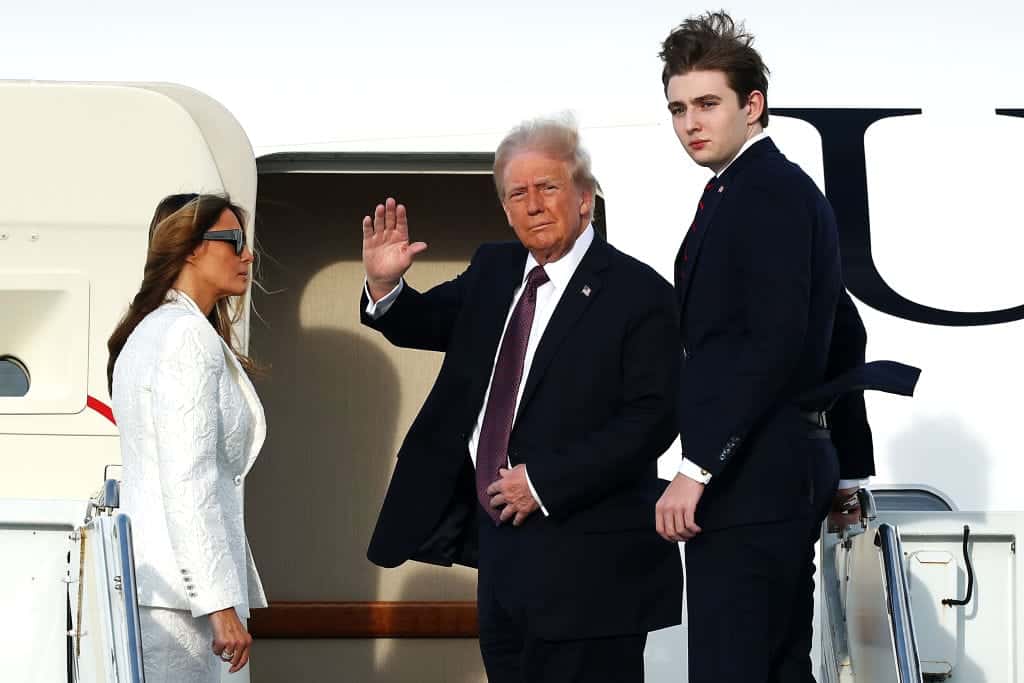
HT17. Photo of Trump walking toward Marine One turns heads after people spot detail

by


 Images of Donald Trump boarding Marine One — first circulated widely in 2025 — have once again resurfaced online, drawing renewed attention across social media platforms. This time, however, the conversation isn’t centered on politics or policy. Instead, it focuses on a visual detail that continues to divide public opinion: his appearance.

Renewed Health Speculation in 2026

In 2026, discussions about Trump’s health have intensified, fueled by recurring rumors and heightened public scrutiny. One recent claim, which spread rapidly on April 4, alleged that the 79-year-old president had been taken to Walter Reed National Military Medical Center. The report was later denied by the White House after several hours of uncertainty.

Trump has consistently maintained that he remains in strong physical condition. Still, his age has become a focal point of public discussion, especially since he is the oldest individual to take the presidential oath of office. Comparisons with Joe Biden have further amplified these conversations, particularly given Trump’s prior criticism of his predecessor’s fitness.

“Healthier Look” or Misleading Perception?

As the Marine One photos circulate again, reactions have split into two clear narratives. Some observers point to what they interpret as a slimmer physique and looser-fitting clothing, suggesting lifestyle improvements or increased discipline. Supporters often frame these images as evidence that Trump appears more energetic or even rejuvenated.

Others, however, urge caution. They note that visible changes in appearance — particularly in older individuals — can easily lead to overinterpretation without medical context. In this view, the images alone offer no reliable basis for conclusions about health. This divide reflects a broader pattern: visual impressions often become symbolic, shaped as much by personal beliefs as by objective observation.

Diet, Habits, and Internet Theories

Public fascination with Trump’s lifestyle has long contributed to speculation about his health. He has openly discussed making adjustments to his diet over time, with Melania Trump frequently mentioned in media narratives as encouraging healthier routines. At the same time, his well-documented preference for fast food remains part of his public image. Reports and past accounts describe a diet that included McDonald’s, KFC, pizza, and Diet Coke — sometimes in large quantities.

One widely cited claim suggested he consumed up to a dozen cans of Diet Coke per day, even having a system in place to request them easily while in the White House. Online discussions have also ventured into more speculative territory, including unverified claims about weight-loss medications or sudden health changes. These remain unsupported and largely driven by social media conjecture rather than confirmed information.

Why These Images Keep Coming Back

The endurance of these Marine One photos lies not in their originality, but in their adaptability. Each time they reappear, they are reinterpreted through the lens of current events — whether new rumors, public appearances, or political developments. As a result, they have evolved beyond simple photographs into recurring symbols within ongoing debates about Trump’s vitality and leadership.

Rather than offering clear answers, the images function as a mirror: reflecting the assumptions, concerns, and perspectives of those viewing them.

A Debate Without Resolution

Ultimately, the resurfacing of these photos highlights a familiar dynamic in modern public discourse. Some see a leader who appears active and capable. Others see reasons for concern. Both interpretations rely heavily on perception rather than verified medical insight. The truth, as often happens in such cases, remains less definitive than the narratives built around it.

And as long as public figures remain under constant scrutiny, images like these will continue to resurface — not because they provide answers, but because they keep the conversation going.

Sources

“The Simpsons Predictions” and the Viral Toenza Passport Story: Separating Fact from Internet Myth

by


In recent years, social media has repeatedly revived the idea that the animated television series The Simpsons has predicted major world events. Viral posts frequently claim that episodes from the long-running show accurately forecast political developments, technological trends, or unusual global incidents years before they occurred.


One of the most recent viral claims involved a supposed incident at John F. Kennedy International Airport in New York, where a traveler was allegedly seen carrying a passport from a country called “Toenza.” The story spread rapidly online and was soon linked to claims that The Simpsons had predicted the event decades earlier.


However, careful fact-checking by journalists and digital media analysts found that the story was not real. The footage circulating online was a digitally created hoax, and the supposed connection to The Simpsons was based on manipulated images rather than an actual episode of the show.


This article explains how the Toenza passport story emerged, why claims about The Simpsons predicting real events often spread online, and what the episode reveals about the growing challenge of misinformation in the age of artificial intelligence.


The Viral Toenza Passport Story


The viral video that sparked the story appeared on social media platforms and showed a woman reportedly arriving at a U.S. airport carrying a passport issued by a country named “Toenza.” The clip suggested that airport officials were unable to identify the country in any database, leading to speculation that the traveler had arrived from a mysterious or unknown nation.


Because the video appeared realistic and included recognizable airport settings, it quickly gained attention online. Millions of views accumulated within days as viewers debated the meaning of the footage.


Some social media users suggested that the video might show a diplomatic traveler from a newly recognized state, while others speculated that it could represent an unusual immigration case. Still others framed it as something more mysterious.


However, journalists and fact-checkers soon determined that the story was fabricated. The video had been assembled using stock footage and digital editing tools. The passport design itself was traced to a publicly available 3D modeling forum where artists share fictional designs.


No government records, immigration authorities, or international organizations have ever recognized a country called Toenza.


Why the Video Looked Convincing

The Toenza video illustrates how modern digital tools can produce realistic imagery that appears authentic at first glance.


Advances in artificial intelligence, computer graphics, and video editing allow creators to combine existing footage with digitally generated elements. When such material is presented without context, it can resemble genuine news footage.


Media analysts note that several techniques are commonly used in such viral hoaxes:


Stock video editing: Real footage of airports or public spaces is repurposed and combined with new digital elements.


Digital document design: Graphic software allows creators to produce convincing replicas of official documents.


AI voice synthesis: Some hoaxes include artificial narration that imitates news broadcasts.


When these elements are combined carefully, the result can appear believable to viewers who encounter the video without additional context.


The Alleged Connection to The Simpsons

Here are the alarming predictions ‘The Simpsons’ have made for 2026 — and which have already come true


Shortly after the Toenza video began circulating, posts appeared claiming that the incident had been predicted in an episode of The Simpsons from the 1990s.


Images shared online showed what appeared to be a scene from the animated series featuring a character with a passport labeled “Toenza.” These images were widely reposted as evidence that the show had once again anticipated a future event.


However, independent reviews of the series’ episode archive revealed that no such scene exists in any official episode.


The screenshots used in the viral posts were digitally altered images created by fans. In several cases, artists had modified frames from existing episodes and inserted fictional passport text.


The claim that The Simpsons predicted the Toenza story was therefore based on edited images rather than authentic footage from the show.


Why The Simpsons Is Often Linked to “Predictions”

The idea that The Simpsons predicts future events has circulated online for many years. The animated series first aired in 1989 and has produced hundreds of episodes covering a wide range of social and political themes.


Because the show frequently satirizes current events and explores imaginative scenarios, viewers sometimes notice similarities between episodes and real-world developments that occur later.


One well-known example often cited by fans involves an episode that referenced Donald Trump becoming president of the United States. While the episode was intended as a satire of politics and media culture, it later gained attention after Trump was elected in 2016.


However, experts in media studies note that such examples often result from coincidence, selective memory, or reinterpretation after events occur.


With more than three decades of episodes and thousands of jokes, it is statistically likely that some fictional scenarios will resemble later real-world developments.


The Role of Digital Editing in “Predictions”

Many viral claims about The Simpsons predictions rely on images or clips that have been altered digitally.


Digital editing tools allow creators to change text on signs, replace background images, or insert new objects into existing frames. When these modified images circulate without context, they may appear authentic.


Researchers studying misinformation emphasize that such images should be verified against original episodes before being treated as evidence.


In many cases, comparisons with official broadcast footage reveal that the viral images were created years after the supposed “prediction.”


Older Internet Myths and Urban Legends

The Toenza story also resembles older internet myths that circulated before the rise of social media.


One of the most famous examples is the story of the “man from Taured,” a legend that began appearing in books and magazines during the mid-20th century. The tale described a traveler who allegedly arrived in Japan with a passport from a country that did not exist.


Although the story has been widely shared in paranormal forums and online discussions, historians and journalists have found no official record of the event. Most researchers consider it a fictional narrative or urban legend.


The Toenza video reused many elements of this earlier myth, but presented them using modern digital media techniques.


Artificial Intelligence and the Spread of Misinformation

Experts in media literacy warn that artificial intelligence has made it easier than ever to produce convincing digital content.


Generative AI systems can create realistic images, videos, and voices in a matter of minutes. When these tools are used responsibly, they support creative projects, education, and entertainment. However, they can also be misused to create misleading content.


Organizations that study digital misinformation emphasize several risks associated with AI-generated media:


• Realistic videos can be created without traditional filming equipment.

• Voice cloning can imitate real speakers.

• Synthetic images can be mistaken for genuine photographs.


These technologies make it increasingly important for viewers to verify information before sharing it online.


Recognizing Signs of Fabricated Media

Digital literacy specialists recommend several steps to identify potentially misleading content:


Check the source

Reliable news organizations verify information before publishing reports.


Search for original footage

If an image or clip is claimed to come from a television show or movie, viewers can compare it with official versions.


Look for independent confirmation

Major events are usually reported by multiple credible outlets.


Be cautious with sensational headlines

Posts that claim extraordinary discoveries or mysterious events often rely on attention-grabbing language rather than verified facts.


Using these steps can help readers avoid spreading misinformation.


The Psychology Behind Viral Myths

Researchers who study internet culture note that stories involving mystery or hidden knowledge often spread quickly because they capture public imagination.


Stories that combine elements of nostalgia, technology, and mystery—such as linking a fictional TV show with a supposed real-world event—can become particularly compelling.


Psychologists suggest that people are naturally drawn to narratives that appear to reveal hidden patterns or predictions about the future.


However, these narratives can sometimes overshadow careful analysis of evidence.


The Importance of Responsible Sharing

As digital media continues to evolve, experts emphasize the importance of responsible sharing online.


Before reposting a viral story, individuals can take simple steps to verify the information:


• Review credible news sources

• Check official statements from organizations involved

• Confirm that images or videos match original sources


These practices help maintain accurate public discussions and reduce the spread of misinformation.


Media Literacy in the Digital Age

Educational institutions and technology organizations increasingly promote media literacy as an essential skill for modern internet users.


Media literacy involves understanding how digital content is produced, recognizing the difference between verified reporting and entertainment, and evaluating the credibility of sources.


As artificial intelligence becomes more widely used in media production, these skills will become even more important.


Conclusion

The viral story about a traveler carrying a passport from a fictional country called Toenza—and claims that The Simpsons predicted the incident—illustrates how quickly misinformation can spread in the digital era.


Investigations by journalists and media analysts confirmed that the video was a digital fabrication created using edited footage and computer-generated elements. The supposed connection to The Simpsons was also based on altered images rather than an actual episode of the series.


While the story may appear entertaining, it highlights a larger challenge facing modern media: the increasing difficulty of distinguishing authentic information from digitally created content.


As artificial intelligence tools continue to improve, the ability to verify information and rely on credible sources will remain essential. By approaching viral claims with curiosity and critical thinking, audiences can enjoy online content while ensuring that fact and fiction remain clearly separated.